Panoramics

Friday, 5 March 2010


=> St. Mary Square in Ire­land

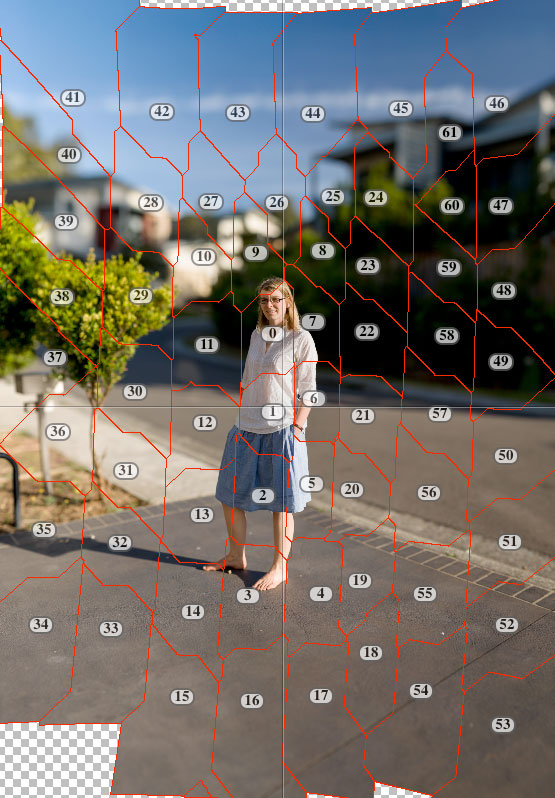
Here’s another première — and the reason why it’s been so quiet here, lately: Pan­or­amics. Hav­ing played around with pan­or­amic pho­to­graphy for quite a while I never got it quite right.

I mean, I’ve had a pan­or­amic tri­pod head for a good while now, but using it together with a wide angle lens res­ul­ted in a rather involved, lengthy pro­cess to put the final pan­or­amic image together (it took me sev­eral days for just one pan­or­ama). Plus you don’t always want to be lug­ging all this gear around…

Any­way, what changed all this was this art­icle which presents a tech­nique that only requires 4 pic­tures to be taken (with a fisheye lens) to get a decent 360°x180° view of basic­ally everything. Together with the insane 25 mega­pixel res­ol­u­tion of my cam­era and some suit­able soft­ware (which just does work sig­ni­fic­antly bet­ter, more reli­able and faster than the free Hugin) I can get a 8200×4100 pixel pan­or­ama without a tri­pod and in no time at all!

So I’ve spent the past two weeks dip­ping my toes in pan­or­amic waters, and I’ve cre­ated quite a few lately. Watch this space as I post more images and talk a bit more about the actual tech­nique (in case you’re inter­ested). Ulti­mately, of course, I’d like to mon­et­ise my grow­ing exper­i­ence in the area, just like with my reg­u­lar pho­to­graphy.

Lens:Peleng 8mm Fisheye
Pictures:4 + 1 (PPV + nadir)
Posted at 17:47

Snooker

Sunday, 7 February 2010

Down in the snooker hall, Maynooth, 2010reflection

A small per­mière — here’s my first “ana­log” image on this blog. Yes, “ana­log” as in taken with an old ana­log cam­era on black & white film (Ilford XP2 Super). Noth­ing too spe­cial, just a nice, moody photo I took down in the snooker hall of the col­lege.

I recently star­ted tak­ing film pho­tos again for a num­ber of reas­ons. First of all, it’s kind of cool. Second, press­ing the shut­ter but­ton costs me roughly 50c each time, so even though these are not huge sums (com­pared to medium format or even large format pho­to­graphy) you don’t just go simply snap­ping away like you were using a digital cam­era. No, you end up slow­ing down a lot. Double and triple check­ing everything, com­pos­i­tion, cam­era set­tings — espe­cially shut­ter speed as there’s no “sensor based” image sta­bil­isa­tion on film, so I have to be very con­scious of the 1-​over-​focal-​length rule, see here for example — and if the per­son I’m about to shoot is about to blink her eyes. Third — not that I think my pho­to­graphy will be any more rel­ev­ant in 50 years than it is now — people will always be able to do some­thing with a film neg­at­ive, but not neces­sar­ily with a file in an ancient film format, if it sur­vives that long any­way and doesn’t get lost in a hard drive crash.

At the moment I’m just get­ting the film devoloped down at the chem­ist (3 EUR for a roll of 36), then “scan” the images using my digital cam­era on a self-​built light table, together with a macro lens and flash gun from below. For­give me, but I’m really proud of the set-​up — you can see the proof of concept set-​up here, and the cur­rent ver­sion here. Obvi­ously a flim scan­ner would be bet­ter at han­del­ing dust and other types of air­born dirt, but none of the afford­able ones give you 25 Mega­pixel scans ;-)

Focal length: 50 mm
Aperture:ƒ/2.0
Exposure:1/45 s
ISO:400
Film:Ilford XP2 Super
Location: Maynooth, Ireland
Posted at 18:23

Blue Moon

Sunday, 31 January 2010

Blue moon, Maynooth, Ireland, 2010reflection

I can’t help tak­ing pho­tos from our bal­cony. There’re just too many inter­est­ing scenes your get through­out the day and the night.

This one here was taken one foggy even­ing with the moon up in the sky. Unfor­tu­nately, the moon always feels lar­ger in real life than it turns out on your pho­tos. Unless you use a really long focal length, it just ends up really small :(

But I still liked the col­our con­trast (again) between the orange glow from the street lams and the blue-​ish moon. Also — it’s kind of hard to see on this pic­utre — but the layer of fog that night wasn’t very high and the moon was just above it, in the clear. Not the greates pic­ture, but I still wanted to share it :-)

Focal length: 24 mm
Aperture:ƒ/9.0
Exposure:5.0 s
ISO:200
Film:Carl Zeiss 24-70/2.8
Location: Maynooth, Ireland
Posted at 18:54

Almost night shots

Wednesday, 20 January 2010

Brandenburg Gate, Berlin, 2007reflection

There are sev­eral inter­est­ing times througout the day to take pho­tos. For instance, I recently talked about the Golden Hour. Today, I’d like to talk about the last moments of the dusk.

Fam­ous build­ings and struc­tures are typ­ic­ally lit with Sodium vapour or Halo­gen lamps which pro­duce an orangy /​yel­lowy type of light. Now what’s the com­ple­ment­ary col­our of that? You’re right, it’s blue. What do we know about warm and cold col­ours? Warm col­ours stand out, make the object appear closer, more present, where­ase cold col­ours cre­ate dis­tance and sep­ar­a­tion. Now that’s a won­der­ful con­trast, isn’t it?

So next time you want to take a night shot of some­thing, try not to take it when it’s already com­pletely dark, but a bit earlier, towards the end of dusk. That way, you can achieve a lovely deep, dark blue in the sky (weather per­mit­ting…) which can give you beau­ti­ful night shots with a not-​so-​boring skye.

Focal length: 18 mm (≈27 mm)
Aperture:ƒ/3.5
Exposure:1/30 s
ISO:640
Film:Sony 18-70
Location: Berlin, Germany
Posted at 21:27

Always at the ready

Saturday, 16 January 2010

Fog late at night, Maynooth, Ireland, 2010reflection

Hands down, the best cam­era is the one you’ve got in your pocket, always at the ready. I must have said that before some­where, but there’s no bet­ter cam­era than the one you hap­pen to have with you when you need it.

The photo here was taken late at night when I was return­ing from Dub­lin. A ser­i­ously creepy fog hung over the by-​then quiet vil­lage (ok, town…) and pro­duced this sur­real but chilly atmo­sphere. I so wished I’d have had my film cam­era with me, or my digital SLR, but I didn’t. So I tried to take a photo with the cam­era on my phone… Bet­ter than noth­ing, I thought.

As it was rather dark, the cam­era basic­ally just said “That’s it, I’m out of here”. Unfor­tu­nately, the com­pany with a veget­able in its logo doesn’t let you con­fig­ure or manip­u­late in terms of cam­era set­tings, expos­ure or what­not — you’re stuck in fully auto­matic mode. On top of that, it appears that the soft­ware just won’t use shut­ter speeds of longer than a 110 of a second, and the ISO maxes out at 1000. That meant that the over­all pic­ture was quite dark, and I had to push the bright­ness a lot in post-​processing. That, in turn, brought out loads of noise, but hey, that’s fine — just do con­vert the image to black & white trick and the noise can work for you.

So that’s the pic­ture I made out of it, as I said bright­en­ing the ori­ginal image some­what, and adjust­ing the black level up some­what as to main­tain the “low-​key” spirit of the pic­ture. Quite a con­trast to the pre­vi­ous post, I guess.

Focal length: 3.85 mm (≈37 mm)
Aperture:ƒ/2.8
Exposure:1/10 s
ISO:1000
Camera:iPhone 3GS
Location: Maynooth, Ireland
Posted at 0:25

High key

Monday, 11 January 2010

Magdalena at her wedding, Ojerzyce, Poland, 2008reflection

Remin­is­cent of the Sugar loaf pic­ture from a while back, here’s another high-​key type of photo. Now when you shoot wed­dings with brides in white dresses and kids play­ing around, high-​key may feel cheesy and cliché, but every now and then you may get some real gems. High-​key in pho­to­graphy usu­ally refers to sub­jects and scenes that you inten­tion­ally over­ex­pose slightly; often­times the motives them­selves would have light tones to start off with.

Now there’s two ways of get­ting high-​key images. Either you really over­ex­pose the pic­ture when you take it, or you push the bright­ness after­wards in post-​processing (like this one here, which has been brightened by almost 2 EV). For the lat­ter, how­ever, you really want to have been shoot­ing in RAW, oth­er­wise there’s just not enough inform­a­tion in the dark tones to work with…

Finally you also want to play around with the sat­ur­a­tion. The sugar loaf photo, for instance, was highly sat­ur­ated, whereas the one here is a bit more muted. If you really want to go over the top, exper­i­ment with a white vignette.

Focal length: 50 mm (≈75 mm)
Aperture:ƒ/2.0
Exposure:1/125 s
ISO:1250
Film:Minolta 50/1.4
Location: Ojerzyce, Poland
Posted at 23:41